
Back to daily archive

D A I L Y   N E W S

2026-10-14

Your apps. Your music. Your call.

Wednesday, October 14, 2026

The app store has an app for almost everything. Except the oddly specific thing you actually need. Google Play is starting to close that gap by letting adults in select markets run personal Android apps they build with AI. Think one small household checklist, not a new business with a launch party. Deezer is taking the opposite approach. Instead of helping you make more AI content, it plans to let you filter fully AI-generated music out of your search experience. And OPPO wants its next phone assistant to gather the files and bookings you normally chase across apps. The useful thread is control. Make the helper you need, choose what reaches you, and decide what information leaves your device. None of these announcements removes the need to check the result. Some features are rolling out, some are promised, and some still need launch details. Start with a harmless example and one clear job. A useful result beats a convincing demo.

Today's top stories

Google Play official artwork introducing its new discovery experience
Google Play official product artwork.
Google

The app you need might be the one you make.

You do not need a whole new productivity system. Maybe you need a checklist that matches your household, or a simple tracker with exactly the fields you use. Google's October 13 Play update makes that kind of personal experiment more accessible. Using Google AI Studio, you can describe an Android app in ordinary language and have AI help build it. Google says you can now run these personal apps on your own device through Play using a standard Google account, without opening a developer account. That process is often called vibe coding. In plain English, you describe what you want and revise the software through conversation. The important part of this announcement is where the result goes. Google says personal creations stay separate from the public store catalog. The rollout starts in select markets, including the United States, for people aged 18 and over. Sharing with a small circle of friends and family is planned for the coming months. Publishing publicly still means moving to a professional developer account and going through the usual reviews.

Why it matters For a beginner, keep the first project boring on purpose. Ask for one checklist with three fields, then test adding, changing and deleting a sample item. Check what happens when you close and reopen it. Do not start with payment details, medical records or a tool you need in an emergency. Google's privacy and security statements describe its intended service, not proof that every app you generate will behave correctly. We have not tested this rollout. If it is available to your account, the win is a tiny helper that works reliably, not a bigger idea that needs constant repair.
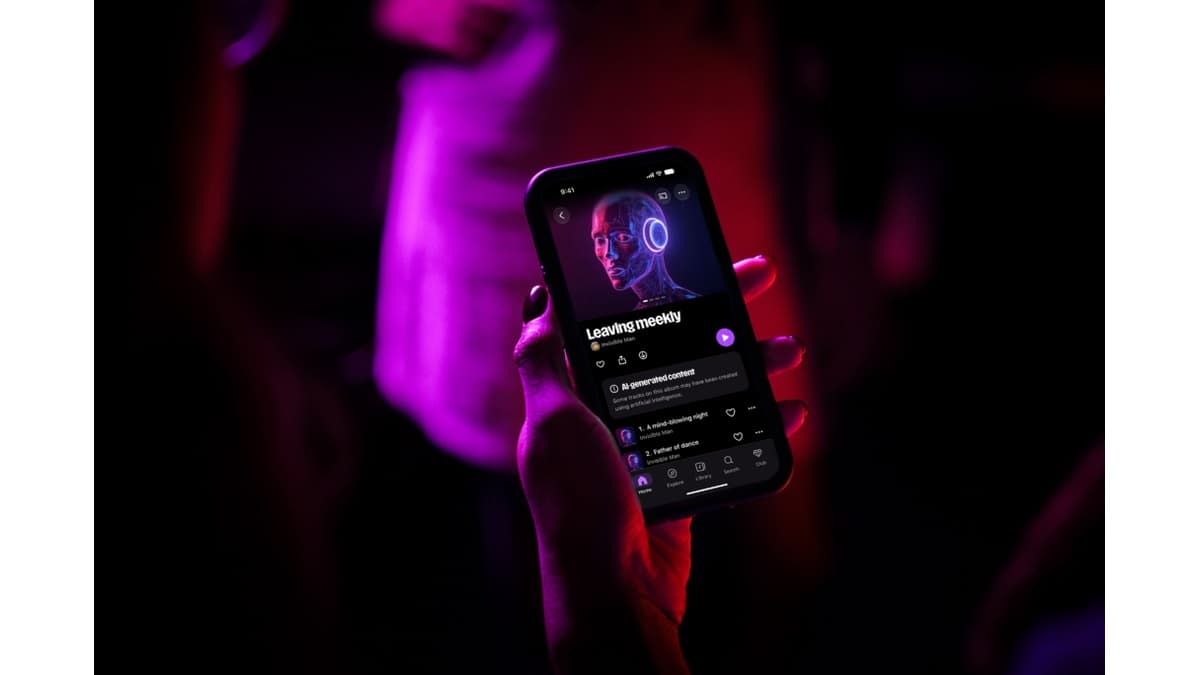
Deezer official artwork explaining its AI music detection initiative
Deezer official AI-detection artwork.
Deezer

Your music search gets an AI off switch. Eventually.

Sometimes the feature you want is less content. Deezer announced a setting that will let listeners exclude fully AI-generated music from their streaming experience. Its official explanation is specific about search. Turning the toggle on will keep identified AI-generated tracks, albums and related artists out of search results. Turning it off will restore access. The company plans to introduce the setting globally before the end of 2026. This is a promised feature, not a switch we can tell you to use today. Deezer already labels detected AI-generated music and keeps it out of algorithmic recommendations and editorial playlists, according to the company. The new setting adds a listener choice on top of that existing approach. It also draws a boundary worth understanding. The target is music created entirely through generative AI platforms. Music that uses limited AI assistance as part of a human creative process is treated differently. An AI off switch therefore does not mean a universal guarantee that no AI tool touched anything you hear.

Why it matters For listeners, the useful change is deciding what belongs in your own search experience without having to investigate every unfamiliar artist. For creators, it is another reason to read a platform's current upload and labeling rules instead of guessing from a feature name. Detection still depends on the provider's technology and scope. We have not independently tested its accuracy. Watch for the actual rollout and the setting's final wording before changing services just for this promise. More control is useful. Treating a filter as a perfect authenticity certificate would go too far.

Official OPPO and Manus partnership announcement artwork
OPPO and Manus official announcement artwork.
OPPO

The phone can gather the trip. You still approve the sharing.

The flight booking is in one app. The hotel confirmation is in another. The restaurant reservation is somewhere in your messages. OPPO's partnership with Manus is aimed at that familiar scavenger hunt. The companies announced a new Agent Mode for AI Mind Pilot on the upcoming Find X10 phones with ColorOS 17. An agent is an assistant that can work through several steps toward a result, rather than only answer one question. OPPO describes a travel example in which the assistant finds bookings across phone apps and combines them with online information into a day-by-day itinerary. Other announced tasks include organizing trip photos and bringing files together into a presentation or proposal. These are company-described capabilities, not results from our own testing. Availability and supported markets will be announced at launch, so do not assume the feature is ready on your current phone or available where you live.

Why it matters The permission boundary matters as much as the finished itinerary. OPPO says local tasks such as finding, organizing and renaming files or photos keep the original content on the device, without sharing it with Manus. If a task needs external processing, the assistant is supposed to ask for explicit confirmation before uploading or sharing relevant content. That is the design the company describes, not an independent privacy audit. If the feature becomes available to you, start with a few harmless files and inspect the result and confirmation screen. Verify dates and bookings yourself. A request to organize a trip should not quietly become permission to expose every document on the phone.

More AI signals

  • Google
    Compare before installing

    Google says Ask Play can now compare apps and highlight differences and user sentiment. Use the comparison to narrow your options, then check permissions and the actual app details.

  • YYForce via PR Newswire
    Hotel robots are planned, not already on shift

    YYForce and two Singapore hotels announced specialized delivery, logistics and cleaning robots, but the release says deployment has not begun. Humanoid housekeeping is a separate future research phase, not a demonstrated service today.

LLM releases and new features

  • Google
    The new model comes with paid access and rollout details.

    Google announced global Gemini 4 Argon access for developers and businesses on October 13. Everyday access in the Gemini app and AI Mode requires Google AI Pro or Ultra, while Antigravity requires Ultra. The introductory API price ends November 30. Treat Google's performance claims as company results, not proof of how it will handle your task.

Courses and learning

  • Google
    Start with the basics, not another stack of tools.

    Google AI Essentials is a self-paced beginner course with five modules and no experience requirement. Google lists less than five hours to complete it. Start with Introduction to AI, then practice on a harmless task. In the United States and Canada it costs $49 a month after a seven-day trial, so check enrollment and cancellation terms first.

Events

  • OpenAI Academy
    Bring an educator question to office hours.

    OpenAI Academy's online AI Skills Jam office hours for K-12 educators run October 21 from 2 PM to 3 PM Eastern. The session continues questions and themes from Jam Day, then takes participant questions. Registration is offered; no ticket price is displayed. Keep student details out of examples.

Your Move

  • ACC Network
    Build one tiny helper. Test the boring parts.

    Write down one small recurring task and the three things a helper must do. If personal apps are available to you, try a checklist with made-up items. Test changing an entry, removing it and reopening the app. If you are waiting on a rollout, sketch the same test on paper. Do not connect private files or payment details just to make the demo feel more impressive.